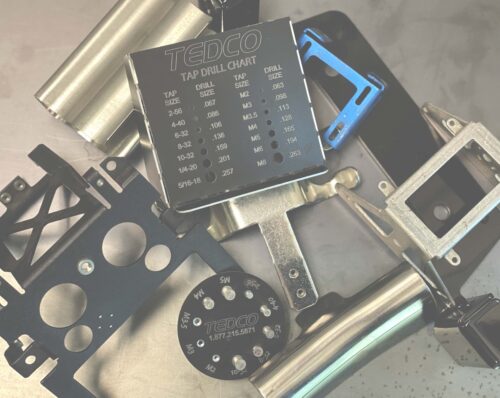
Posted by Aubrey Davis on | Comments Off on October is Tedco’s Anniversary Month
A lot of the work we do at Tedco starts with one part. Sometimes it is a prototype for a new design. Sometimes it is a replacement part that may only ever be made once. Other times it is the first of many—a part that eventually becomes a regular production order. We like all of them.
Prototype and one-off work has always been an important part of Tedco. There is something rewarding about taking a drawing, an idea, or even an old part that needs to be duplicated and figuring out how to make it. At the same time, we have watched many of those first parts grow into something much bigger. A prototype may become a run of 10 or 50. Some eventually become hundreds of parts, while others turn into components we make every month.
Over the years, we have also had the opportunity to work with companies when they were developing their first products or were still relatively small. Some of those companies grew considerably, and it has been rewarding to continue making parts for them along the way.
But growth in quantity has never changed the value of the original work. A one-off part can require just as much thought, skill, and problem-solving as a production run of hundreds. In many cases, it requires more.
This month marks 39 years since Tedco opened its doors. Our equipment has changed, our capabilities have grown, and today we may run larger quantities than we once did—but we still make the prototypes, the small runs, the oddball parts, and the one-piece jobs right alongside our regular production work. Whether a customer needs one or hundreds, it still starts the same way: Someone needs a part made.
Thirty-nine years in, you might think we have seen just about every kind of sheet metal part there is. We haven’t. One of the things that still makes this work interesting is that no two days at Tedco are quite the same. On any given day, we may be working on a one-piece prototype, a small run of parts, a difficult forming job that takes some figuring out, and a repeat production order that we make month after month.
Some jobs start with a drawing and a question: Can you make this? Others come back to us again and again, sometimes growing from just a few pieces into much larger quantities.
That mix has become a big part of what Tedco looks like today. We still enjoy the challenge of the unusual jobs—the parts that require some thought, a special setup, or a different way of approaching the work. At the same time, we have customers who depend on us for regular production, and we take just as much pride in keeping those parts consistent from one order to the next.
After 39 years, the equipment has changed and the type of work has grown, but one thing hasn’t: another part is always coming through the door, giving us something new to figure out.
Posted by Aubrey Davis on | Comments Off on Industry Spotlight: Sheet Metal Fabrication for Renewable Energy
The renewable energy industry has been demanding precision metal components that can handle various climates and outdoor environments for decades. Metal fabrication plays a crucial role in the reliability and functionality of energy storage systems, solar and wind turbines, and emerging hydrogen technologies as the industry is expanding at an unprecedented pace.
TEDCO is positioned to meet the needs of renewable energy engineers and OEMs with our proven forty years of reliability and precision metal components. Our core competencies in metal fabrication include bulk production projects, experience with complex geometries and tolerances, and decades of prototype manufacturing knowledge. Our agility to move from prototype to short-run production helps clients bring parts to newly developed energy systems quickly without sacrificing quality.
Sheet Metal Components for Renewable Energy
Metal Enclosures- The Renewable Energy Industry frequently requests durable metal enclosures to protect electronics and sensitive components from the elements in outdoor environments. TEDCO’s metal enclosures are designed with quality in mind, fabricated to withstand various conditions while maintaining airflow and thermal characteristics. Enclosure housing is one of our most sought-after products for energy storage systems.
Solar Power Components- We regularly produce custom sheet metal components for solar installations, including mounting brackets, racking hardware, and combiner boxes. These parts demand corrosion-resistant materials and reliable, consistent forming to ensure long-term performance, which is why materials like aluminum and stainless steel are often preferred for solar applications.
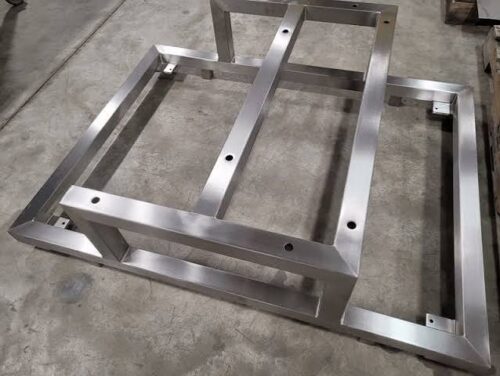
Structural Frames and Supports- Renewable energy projects like hydrogen systems, EV charging infrastructure, and modular power units require custom frames and support structures. TEDCO’s ability to fabricate complex welded and bolted assemblies using stainless steel and other rugged materials makes us a valuable partner for these applications.
Electrical Power Parts- Our shop regularly creates mounting brackets, grounding plates, and supports for electrical safety to shield critical electrical components. These tight spaces usually require precise tolerances and repetitive production runs with quick timeframes. This is not a problem for TEDCO, as we have decades of knowledge of high-performance precision sheet metal solutions for the renewable energy industry.
Wind Energy Parts- The infrastructure of wind-powered energy projects requires sheet metal fabrication for housing control panels and protecting mechanical systems from the elements. TEDCO produces reliable components that withstand movement and exposure to the environment.
Renewable Energy Material Selection
Choosing the right material is foundational to performance, durability, and cost. For renewable energy parts, we frequently use aluminum alloys like 5052 and 6061, valued for their strength-to-weight ratio and corrosion resistance. Stainless steel, particularly grades 304 and 316, is another top choice for outdoor and marine environments. We also work with galvanized and steel for parts that will be painted or powder-coated, cold-rolled steel for indoor enclosures, and copper alloys for electrical grounding and conductivity.
Assembly and Hardware
Optimizing your design for assembly access, hardware installation, and fastening is important to an efficient fabrication process. TEDCO collaborates with customers to identify the best fastener options, hardware placement, and access points, streamlining processes on the shop floor and in the field.
A Proven Renewable Energy Precision Sheet Metal Fabricator
In an industry where every component must be built to last, TEDCO has proven itself as a trusted partner for custom metal fabrication. Our deep experience with precision metal fabrication allows us to support clean energy innovators with quality, speed, and expertise.
From material selection to manufacturability review, from sheet metal prototyping to scalable production, we provide the kind of hands-on partnership that helps renewable energy projects succeed. If you’re searching for a reliable, knowledgeable fabrication company with proven experience in renewables, look no further than TEDCO.
Ready to get started? Contact us today to talk about your next renewable energy project.
Posted by Aubrey Davis on | Comments Off on Industry Spotlight: Sheet Metal Fabrication for the Telecommunication Industry
Sheet metal fabrication for the telecommunication industry is one of our most valued and profitable partnerships within our line of work. Telecommunication infrastructure is the backbone of the digital world, with billions of people relying on it for instant global communication. The telecommunication industry requires precision-fabricated metal components to maintain performance and technological advancements that are unseen to the public using such developments.
At Tedco Precision Sheet Metal, we have partnered with telecom companies throughout our history. Our custom metal fabrication capabilities are perfectly suited to meet the industry’s most complex and precise projects. Our decades of expertise help us to understand the unique challenges of telecommunications and the importance of a timely leadtime, and quality performance.
Common Telecommunications Sheet Metal Components
The Telecom industry uses a wide array of sheet metal products that are required for large rollouts. Tedco DFM Experts (Design for Manufacturing) ensures smooth production with cost-effective solutions throughout the entire process. Applying DFM principles early helps prevent issues such as tolerance stacking, airflow restrictions, improper grounding, or difficult assembly. A fabricator with telecom experience can identify design adjustments that reduce cost, improve lead time, and ensure reliable field performance.
Key Telecommunications Sheet Metal Components include:
Battery Backup Cabinets: These critical components protect and house batteries, and our fabrication allows for proper ventilation and cooling while providing the structural integrity necessary.
Antenna Housings: Our metal fabricators maintain the tolerances required for antenna housings while ensuring durability for outdoor installations.
Server Racks and Cabinets: These racks provide robust support and grounding for critical equipment.
Enclosures and Casings: Our shop has extensive experience creating enclosures that protect sensitive telecommunications equipment from environmental factors, customized with vents for cooling.
Cable Management Trays and Raceway Systems: These systems are often fabricated from sheet metal for durability and ease of installation. Precision-placed mounting points reduce installation time while ensuring secure cable support.
Common Materials Used for Telecommunications Components
Aluminum: Aluminum fabrication is excellent for applications requiring strong, lightweight solutions.
Stainless steel: For environments demanding the highest durability.
Cold-rolled steel: Often well-suited to indoor applications or parts requiring a smooth finish.
Galvanized steel: Ideal for outdoor applications that prioritize corrosion resistance.
A long history and proven track record with the telecom industry render us the ideal partner for fabrication services. Our distinctive capabilities and advantages include:
In-House Welding and Other Services: We offer a range of sheet metal welding in our metal fabrication shop, including MIG, TIG, spot, and resistance welding. Our experienced team will handle projects of any scale or difficulty.
Hardware Guidance and Installation: We help you choose the ideal hardware for your project to ensure structural integrity while minimizing costs.
Advanced Capabilities: At Tedco, our sheet metal forming delivers precise parts quickly. Our laser cutting allows for precise cuts with minimal material waste, while our in-house punch press achieves tolerances of +/- .003”
Quality Assurance: Our rigorous quality control process ensures every component will always meet industry standards.
Tedco combines advanced fabrication capabilities with decades of telecom experience. In-house laser cutting, forming, punching, welding, hardware installation, and quality control allow for tight process control and consistent results. Our team also provides design guidance, hardware recommendations, and custom rack and enclosure solutions to support both prototype and production telecom programs.
Are you looking for a custom fabrication shop that can handle your next telecom project? Our expert team of fabricators is ready to tackle your next project. Request a quote today and learn why Tedco Precision Sheet Metal is the preferred partner of many telecommunications companies.
Posted by Aubrey Davis on | Comments Off on Coming Soon to Tedco
Why the ‘H’ Matters
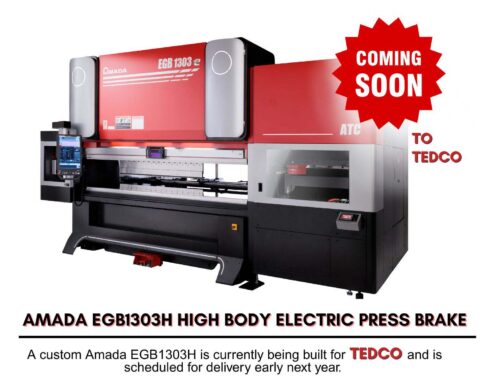
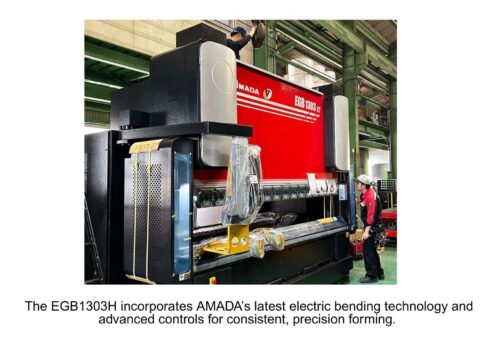
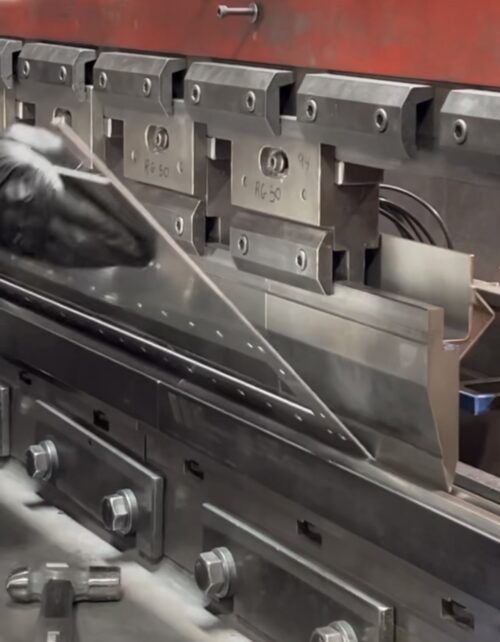
The biggest difference between our new EGB1303H and a standard EGB1303 is the High-Body frame. The additional daylight and open height allow us to bend much deeper parts without interference. This expands our capabilities for tall enclosures, deep channels, complex formed parts, and assemblies that previously required multiple setups or special workarounds.
What This Means for Our Customers
Faster setup times resulting in shorter lead times
More capacity for deep and difficult formed parts
High bending accuracy and repeatability with AMADA all-electric servo technology
Cleaner and quieter operation and less maintenance than hydraulic brakes
Greater efficiency, keeping TEDCO competitive and high-quality
Additional capacity for growing numbers with existing and future customers
A Major Investment for TEDCO’s Future
For nearly 40 years, Tedco has continued to invest in modern manufacturing equipment to provide customers with better quality, tighter tolerances, and dependable delivery. Our new EGB1303H continues that commitment. It will work alongside our existing AMADA equipment to increase throughput, improve consistency, and expand the range of parts we can manufacture in-house.
We’re excited to welcome this machine to our shop early next year and can’t wait to begin producing customer parts on one of AMADA’s newest electric press brakes.
“Every investment we make is focused on one goal—giving our customers better quality, faster turnaround, and the capability to build parts others can’t.”
Posted by Aubrey Davis on | Comments Off on Deciding Between Sheet Metal and Machining Components
Deciding between Sheet metal and machining components is one of the first decisions engineers make during the design process. This decision impacts cost, lead time, whether there are additional steps in the fabrication assembly line, and overall performance of components. Both options have their advantages and deliver high-quality projects. Here is a guide to help determine which manufacturing process best fits your sheet metal needs.
How Complex Is It?
Choose sheet metal fabrication when your products are lightweight brackets, chassis, or enclosures, and the design is made from a flat pattern, has flanges, or requires straightforward forming.
Choose machining if the part requires tight contours, deep cavities, and pockets. Machining is best for components with internal features or multi-plane designs. If the geometry can be created from a flat pattern, metal fabrication is the right option; if not, machining is the way to go.
How is the Pricing Different?
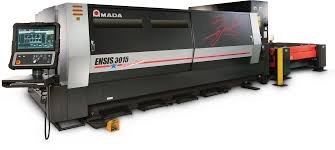
With sheet metal fabrication, there is less material waste, production is typically faster (especially with TEDCO’s Amada ENSIS 3015AJ Laser), and costs are adjusted for bulk quantity projects.
You can see higher machining costs due to material removal and cycle times. Components that have more complexities add to labor costs and longer lead times. For many designs, the cost difference between sheet metal vs machined components becomes clear once strength, geometry, and tolerances are considered.
Tight Tolerances
Sheet metal is best for standard commercial tolerances and bend variability.Machining is best for tight tolerances, mating surfaces, and critical fits. When precision drives product performance, a machined component typically offers the accuracy required.
Material Requirements
Sheet metal works well with aluminum, stainless, and cold-rolled steel. It is ideal for thinner materials and lightweight components. Sheet metal relies on bends and formed features for rigidity.
Machining supports thicker, high-strength components, handling a wide range of materials, and tough alloys. If the parts must withstand significant loads or require tight tolerances, machining may be the better choice.
Scalability
Scalability refers to whether there are plans for bulk production. Sheet metal is excellent for prototypes and large-volume projects. It works best for projects with minimal tooling and fast iterations.
Machining is best for low-to-medium volume jobs, as it is costly at large quantities because there is less automation in machining. Prototyping needs, production goals, and cost target all influence the decision process, so discuss in advance with your fabricators.
When a Hybrid of the Two Makes Sense
Tedco has learned over the years that many project assemblies work best when sheet metal and machined components are combined. Tedco has built a close network of machinists who work directly with us for hybrid jobs. Combinations likely include enclosures with machined internal parts, Sheet metal housing with machined interfaces, or lightweight designs that require both rigidity and accuracy.
Choosing between machining and sheet metal components depends on the requirements of the project. Be sure to take a look at the necessary tolerances, strength, geometry, and the volume and scale of the project. Most importantly, share the budget with your engineering team to make adjustments when necessary. Both processes bring unique advantages, and many projects benefit from a hybrid approach. At TEDCO, we help clients decide the best manufacturing method for early prototypes through full-scale production.
Posted by Aubrey Davis on | Comments Off on Design Tips to Improve Costs, Quality, and Lead Times
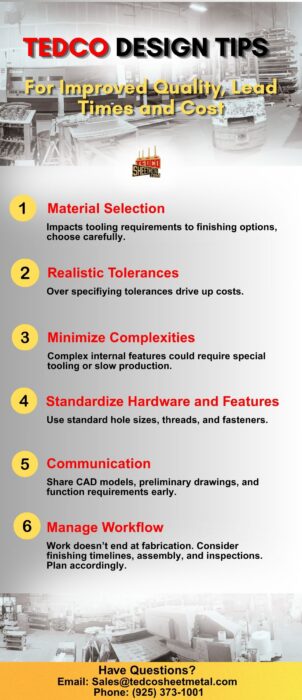
The best designs have manufacturing in mind. We have put together design tips to improve costs, quality, and lead times for future sheet metal fabrication projects with Tedco. When going from concept to production, it is best to keep in mind that better designs consider more than just functionality. Designing for Manufacturability(DEM) ensures your next project is efficient and production-ready.
Choosing the Right Materials
Material selection impacts everything from tooling requirements to finishing options. By locking in material choices early, you can account for cost, availability, and timeline.
Aluminum: Lightweight, laser-cuts quickly, which makes it a very cost-effective material for many industries.
Stainless Steel: Offers resistance to corrosion, but depending on its thickness may take longer on the machines.
Exotics like Titanium: Exotics often require specialized tooling or expertise, which can affect the lead time or production process entirely.
Realistic Tolerances
Tedco can execute tight tolerances when critical, but in general, over-specifying them can drive up costs due to complexity, and the possible need for specialized tooling can delay lead times. We will work with you to identify when precision is necessary and to loosen tolerances in non-critical areas. Standardizing dimensions will reduce setup and quality checks.
Minimize Complexities
Complex internal features, sharp internal corners, or overly complicated designs can slow production or require specialty tooling that would increase costs and lead time. If our experts come across ways to eliminate costs, we might suggest adding radii to internal corners, reducing unnecessary undercuts, or using standard drill sizes instead of custom diameters.
Standardize Features and Hardware
To further reduce the need for custom tooling and to simplify assembly and maintenance requirements, we recommend using standardized hole sizes, threads, and fasteners. This will speed up production and ensure costs are also kept as low as possible.
Managing Workflow
Plan the entire process; the Design for Manufacturability ( DFM) does not end with fabrication. When drawings are given to fabricators, make sure to include call-outs for secondary processes like anodizing, painting, heat treatments, or plating. Be sure to also include any specifications for how the parts should be inspected, packaged, and delivered.
Communication
The most obvious and overlooked design tip involves communicating with your fabricator early and often.Sharing CAD files and preliminary drawings as soon as possible allows for faster identification of potential challenges that may arise. It gives the opportunity for collaborative solutions that save money and time and ensure a smooth transition from prototype to production.
Designing with your fabricator in mind guarantees your concept is brought to life and it won’t be compromised due to lingering deadlines and upcosts. Your vision can be built efficiently, cost-effectively, and with consistent quality.
Posted by Aubrey Davis on | Comments Off on Surface Finishings on Metal Parts
For a majority of metal fabrication jobs, the components are not complete until they receive finishing services. Surface finishings on metal parts play a critical role in how the material performs or how long the part is used.
Surface finishings serve multiple purposes, from enhancing the overall appearance and corrosion resistance to meeting industry standards or company requirements.
Finishings on metal parts that Tedco does in-house include deburring, a process that removes sharp edges, unwanted protrusions, or small imperfections called “burrs.” This step ensures safety, enhances aesthetics, and allows parts to fit together properly.
Tedco’s owner also uses a specialized machine to polish surfaces from semi-polished to mirrored.
Weld cleaning is also a surface finish that uses a specialized device to remove heat tint, oxidation, discoloration, and heat scale left behind after welding.
Common Outside Service Surface Finishings
Tedco has built decades-long relationships with local finishing vendors to give us the best pricing on the market for their services, with the best turnaround times. There are quite a few options for surface finishings provided by our vendors.
Anodizing
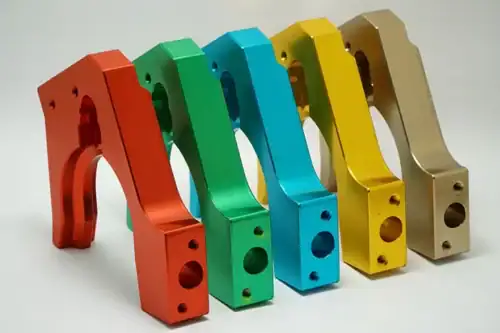
Anodizing is an electrochemical process that converts the metal surface into a decorative, durable, corrosion-resistant, anodic oxide finish. Aluminum is ideally suited to anodizing, although other nonferrous metals, such as magnesium and titanium, also can be anodized.
Powder Coating
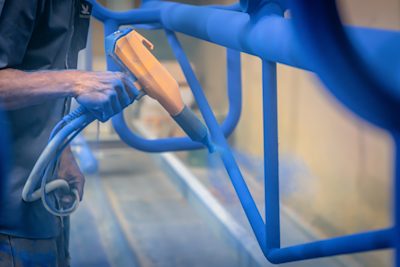
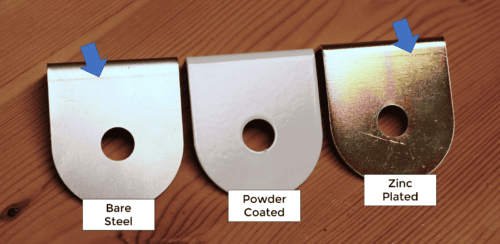
The powder coating process is a dry finishing technique where a finely ground mixture of resin and pigment is electrostatically sprayed onto a grounded metal part. The part is then baked in an oven, melting the powder into a highly durable, continuous polymer coating that resists chipping and scratches.
Zinc and Nickel Plating
Plating is an electroplating process that deposits an alloy of roughly 12–16% nickel and 84–88% zinc onto a metal part. It serves as a sacrificial, highly corrosion-resistant coating. It replaces traditional zinc and environmentally hazardous cadmium in demanding automotive, aerospace, and defense applications.
Passivation
Passivation is a metal finishing process primarily used on stainless steel to enhance corrosion resistance. It involves a controlled acid treatment that removes surface contaminants and free iron. This allows a protective chromium oxide layer to form naturally. This passive layer protects the metal from rust and environmental damage.
Bead Blasting
Bead blasting is a surface finishing process that propels spherical media (like glass beads, ceramic, or metal) at high velocity using compressed air to clean or texture a part. It effectively removes burrs, rust, and surface imperfections while leaving a uniform, matte, or satin finish without altering the part’s dimensions.
The Right Finish
Selecting the correct surface finish depends on the type of material used, the performance requirements, aesthetic needs, and the environment. Choosing the wrong process could be a costly decision, and not all are created equal.
If the components will be exposed to harsh environments- moisture, chemicals, or extreme temperatures the surface finishing must be corrosion resistant. This protects the base and extends the life of the part. Processes like anodizing, plating, or powder coating are best.
In high-use or friction applications, the finish must improve resistance to wear and improve longevity. Industries that this would apply to include aerospace, defense, and industrial equipment.
If appearances matter just as much as functionality, the finish must reflect quality and attention to detail. Especially if the component is customer-facing, finishing is an important step.
How Tedco Supports the Necessary Surface Finishings
At Tedco, surface finishes are carefully selected from the beginning of the estimation process. This treats them as a critical step in the fabrication process. Choosing the best fit from the start and working with vendors we have trusted for decades ensures consistency during production. Components are quality-checked to ensure the surface finishes meet functional and visual requirements.
In conclusion, surface finishings for metal parts are one of the last steps in production, but their impact is felt throughout the entire lifecycle of the component. The right finish can set your parts ahead of competitors and make sure they are real-world ready.
Posted by Aubrey Davis on | Comments Off on Why Revisions are Normal in the Prototyping Process
Introducing a new product into the world may seem like a straightforward process, as described in our blog, “How to Get a Prototype Manufactured,” but there are many obstacles that could arise that lead to early revisions. Developing complex metal components with tight tolerances and unique applications is rarely a perfect design from the start. Refinements are expected; that’s why revisions are normal in the prototyping process.
During NPI, or new product introduction, thoughtful revisions in the beginning development stages help identify areas of improved performance, durability, and cost-saving measures. It’s important to pinpoint possible improvements early on to avoid premature production runs that would ultimately produce faulty parts to customer standards.
Why Revisions are Normal in the Prototyping Process
Even with a great engineered design, some insights are only visible once in the manufacturing space or in a real-world application. If the need for design modifications is caught before reaching real-time application, costs can be saved in additional production time. Possible causes for revisions could be:
Component Optimization:
Improvements that, when made, alter structural integrity, functionality, or overall performance for the better.
Manufacturability Improvements:
Features may seem ideal on paper, but when brought into a manufacturing shop, they could be refined for faster turnaround times or cost-saving measures. Adjustments could be made to the type of welding callouts or requested hardware, all of which would not be recognized until speaking to a manufacturing professional.
Material Selection:
Fabrication may suggest a cheaper metal or material thickness depending on the component’s real-world use. Some material may need testing, or more information to be provided about the type of elements the component will be up against after manufacturing.
Installation:
Sometimes it is necessary to run a first article, or just one part. This ensures fittings are correct and, if assembled with other components, tests how the installation goes. This allows for more revisions to be made before running bulk productions.
Why Early Detection is Ideal
Early evaluation is crucial in identifying potential challenges or adjustments before production is full-scale. This helps avoid risks of overspending for modifications down the line.
Design refinements reduce variations during production, keeping the products consistent and uniform. It also contributes to improving the part’s long-term reliability, identifying which modifications could be made for precision quality and design. Most of the time, this time-consuming step alters the overall design and durability, helping with the transition between prototype to bulk production.
Collaboration is Key
Successful new product introduction (NPI) is often dependent on the communication between the design engineer and manufacturing programmer. With these two being responsible for ironing out the final touches, they must review the first article and collaborate to make sure the component functions accordingly.
At Tedco, we work closely with customers during NPI processes to help refine designs, support manufacturability, and ensure that components transition smoothly from beginning to end.
Posted by Aubrey Davis on | Comments Off on Why Tedco Moved from Punch Presses to Fiber Laser Cutting
Like many fabrication shops that started decades ago, our journey began with punch presses. Let’s dive into why Tedco moved from punch presses to fiber laser cutting nearly thirty years later.
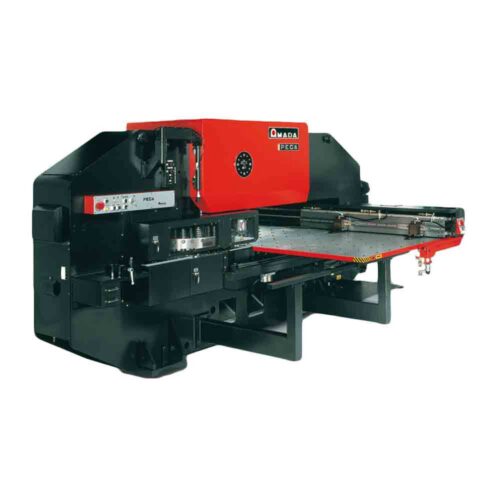
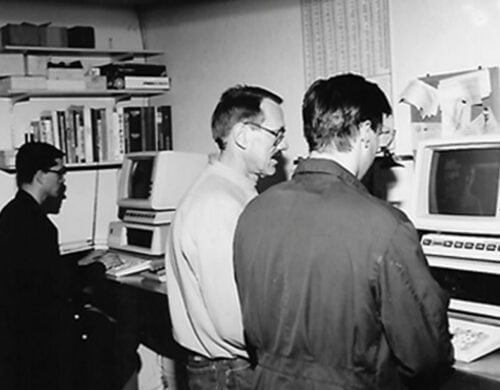
Our first CNC punch was the Amada Vela, a tape-runner machine. Programming a part meant writing code line by line. Every movement of the machine had to be manually typed in. If something was entered incorrectly, the machine simply wouldn’t run the part right.
Later, we upgraded to the Amada Aries. This machine introduced an onboard computer that made programming easier. Instead of memorizing every command, you could press a key and the machine would insert the correct code for that function. Even with this improvement, parts still needed to be programmed manually.
As our workload increased, we added an Amada Pega punch press to provide more tonnage and capacity. Around this time, programming software improved, allowing us to draw parts and automatically generate punch programs.
While this helped programming, the physical setup of the punch press still required significant time and attention.
Before running a job, we had to load the correct punches and dies, verify the proper clearance, ensure the punch was sharp and the correct length, and load it into the turret station that matched the program. For production jobs, this worked well, but Tedco has always focused heavily on prototype work. For prototypes, setup time often became the biggest challenge.
In some cases, it could take hours to prepare the machine just to run a single part. Punching thicker stainless steel parts could also be loud and hard on tooling. Punches occasionally broke, and edges often required additional deburring.
Over the years, we learned many techniques to make punching more efficient, and the machines served us well for decades.
Investing in Fiber Laser Cutting
Eventually, we decided to invest in fiber laser cutting. The transition required some learning, but the impact on productivity was immediate. Instead of loading tools and verifying turret stations, most jobs simply require loading material and running the program.
Complex shapes, slots, and tight corners can be cut without special tooling, dramatically reducing setup time. For a prototype shop, this flexibility makes a major difference in turnaround time.
Even though the laser now performs most of our cutting operations, the punch press still has advantages in certain situations. Machines like the Amada Pega remain valuable for forming operations such as louvers, countersinking, and high-speed perforated patterns.
Punch presses and fiber lasers each have their strengths. Punch presses built the foundation of modern sheet metal fabrication, while fiber lasers offer the flexibility and speed needed for today’s prototype-driven manufacturing.
At Tedco, using the right technology for the job allows us to deliver faster turnaround and better solutions for our customers.
Posted by Aubrey Davis on | Comments Off on Back to Basics: How to Get a Prototype Manufactured
There are recurring customers who have been with us for decades and order bulk-quantity productions. There are also people brand new to the world of sheet metal fabrication who walk through TEDCO’s doors all the time.
Once in a while, it is best to go back to basics and explain processes that are at the very foundation of what we do, such as how to get a prototype manufactured.
Precision sheet metal prototyping gave TEDCO the foundation to execute the larger projects we do today. When our company was just a father, son, and a small metal shop, prototyping was all we did.
Prototyping is the process of quickly building a simplified version of a product to test ideas, gather feedback, and, in some cases, go back to the drawing board for revisions.
Let’s Talk Steps
Preparing Your DigitalModel
Before requesting an estimate from TEDCO, you have to create a DFM, or Design for Manufacturability. You have to ensure your design uses standard material thicknesses and consistent bend radii, as well as welding, hardware, or finishing call-outs. Keep in mind to avoid overly complex tolerances or geometries to keep costs low.
Manufacturers require a 3D STEP file, DXFs, and possibly other formats, depending on the software used to read the drawing.
Choose Your Material
It is best to stick to standard common metal materials like Aluminum, Stainless Steel or Cold-Rolled Steel for the fastest turnaround and lowest costs. If this prototype will not make it to final production and will need alterations before signing off on larger quantities, it’s best to use thinner, less expensive materials. Also smart to choose an in-stock selection from vendors to reduce lead times.
Submitting Request for Quote
Now you can email TEDCO directly, or submit on our request for quote form on the TEDCO website to get pricing and lead time before taking the next steps. If there are any further questions for our executive programmer, you can arrange a meeting to discuss the project at hand. Our experts will help you agree on materials, hardware needed, or how to save costs by eliminating certain aspects of the prototype. Coming in for a meeting also presents the opportunity to tour the shop or talk about machining needs.
This is also the time to decide on finishing treatments such as powder coating, anodizing, or chem film applied for aesthetics or for corrosion resistance.
Fabrication Process
Once the quote is approved, the purchase order is submitted, and the due date is settled upon, it is time to get this project into fabrication. In the next few months, we will dive deeper into the fabrication steps and the machines used throughout the process. Once completed, the customer typically takes the prototype back to their team or on-site, to see if the part will work as designed. If there are any further revisions that have to be made before the part goes into production, TEDCO is here for the next round of prototyping.




 Structural Frames and Supports-