
Like many fabrication shops that started decades ago, our journey began with punch presses. Let’s dive into why Tedco moved from punch presses to fiber laser cutting nearly thirty years later.
Our first CNC punch was the Amada Vela, a tape-runner machine. Programming a part meant writing code line by line. Every movement of the machine had to be manually typed in. If something was entered incorrectly, the machine simply wouldn’t run the part right.
Later, we upgraded to the Amada Aries. This machine introduced an onboard computer that made programming easier. Instead of memorizing every command, you could press a key and the machine would insert the correct code for that function. Even with this improvement, parts still needed to be programmed manually.
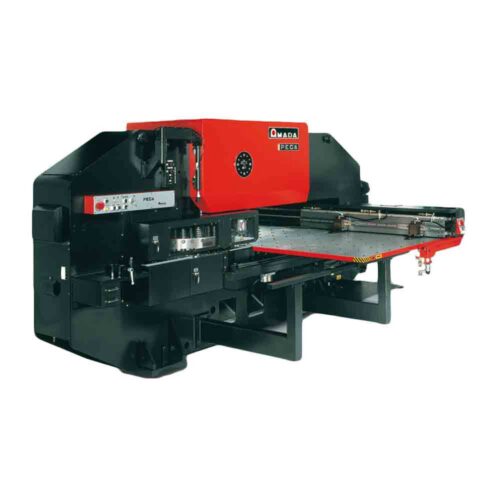
As our workload increased, we added an Amada Pega punch press to provide more tonnage and capacity. Around this time, programming software improved, allowing us to draw parts and automatically generate punch programs.
While this helped programming, the physical setup of the punch press still required significant time and attention.
Before running a job, we had to load the correct punches and dies, verify the proper clearance, ensure the punch was sharp and the correct length, and load it into the turret station that matched the program. For production jobs, this worked well, but Tedco has always focused heavily on prototype work. For prototypes, setup time often became the biggest challenge.
In some cases, it could take hours to prepare the machine just to run a single part. Punching thicker stainless steel parts could also be loud and hard on tooling. Punches occasionally broke, and edges often required additional deburring.
Over the years, we learned many techniques to make punching more efficient, and the machines served us well for decades.
Investing in Fiber Laser Cutting
Eventually, we decided to invest in fiber laser cutting. The transition required some learning, but the impact on productivity was immediate. Instead of loading tools and verifying turret stations, most jobs simply require loading material and running the program.
Complex shapes, slots, and tight corners can be cut without special tooling, dramatically reducing setup time. For a prototype shop, this flexibility makes a major difference in turnaround time.
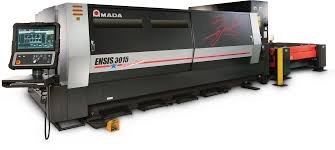
Even though the laser now performs most of our cutting operations, the punch press still has advantages in certain situations. Machines like the Amada Pega remain valuable for forming operations such as louvers, countersinking, and high-speed perforated patterns.
Punch presses and fiber lasers each have their strengths. Punch presses built the foundation of modern sheet metal fabrication, while fiber lasers offer the flexibility and speed needed for today’s prototype-driven manufacturing.
At Tedco, using the right technology for the job allows us to deliver faster turnaround and better solutions for our customers.
Contact us to visit TEDCO’s facility and tour our equipment and machines.>